Introduction: When Your Wrist Says “Ouch”
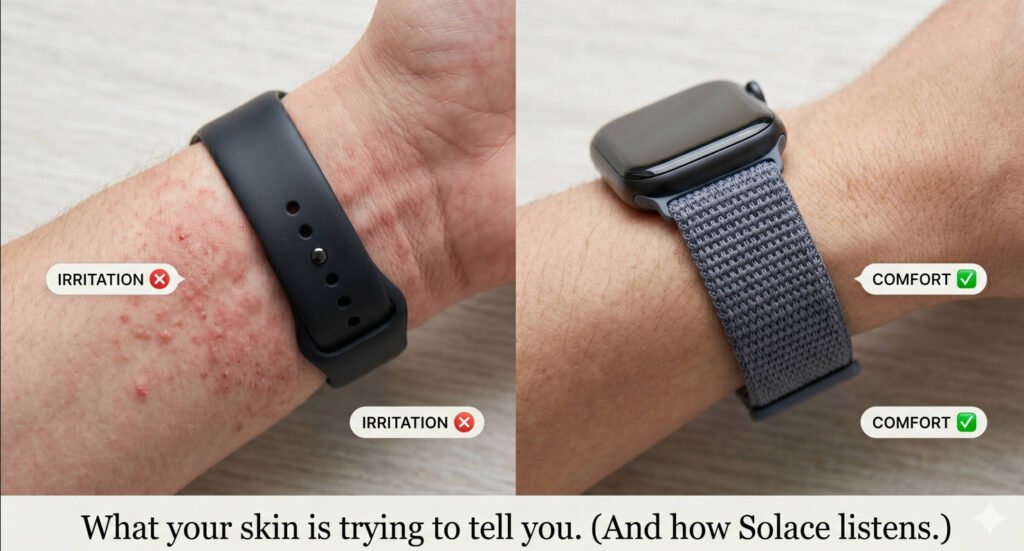
You finally bought that smartwatch to track your steps, sleep, and heart rate. You love the data, the notifications, the motivation. But after a few days of wearing it, your wrist starts to feel itchy. Then red. Then a rash appears – right where the band sits.
This isn’t just “discomfort.” It’s contact dermatitis, and it’s surprisingly common.
The culprit? Often, it’s the band. Many standard watch straps – even those sold by major brands – contain materials that trap moisture, leach chemicals, or trigger allergic reactions. The problem is so widespread that dermatologists now routinely ask patients about their wearables when they see wrist rashes.
Enter Solace Bands. This company didn’t just aim for “comfort” – they engineered their bands specifically for people with sensitive skin, allergies, and conditions like eczema. Their Imperium Adapt line uses a PFA‑free woven material that breathes, dries fast, and avoids the chemical cocktail found in many other bands.
In this guide, we’ll explore why skin reactions happen, what to look for in a safe band, how Solace compares to other “hypoallergenic” options, and real stories from people who switched – and finally found relief.
The Science of Skin Irritation From Watch Bands
To understand why your smartwatch band might be causing problems, you need to know a few basic facts about skin.
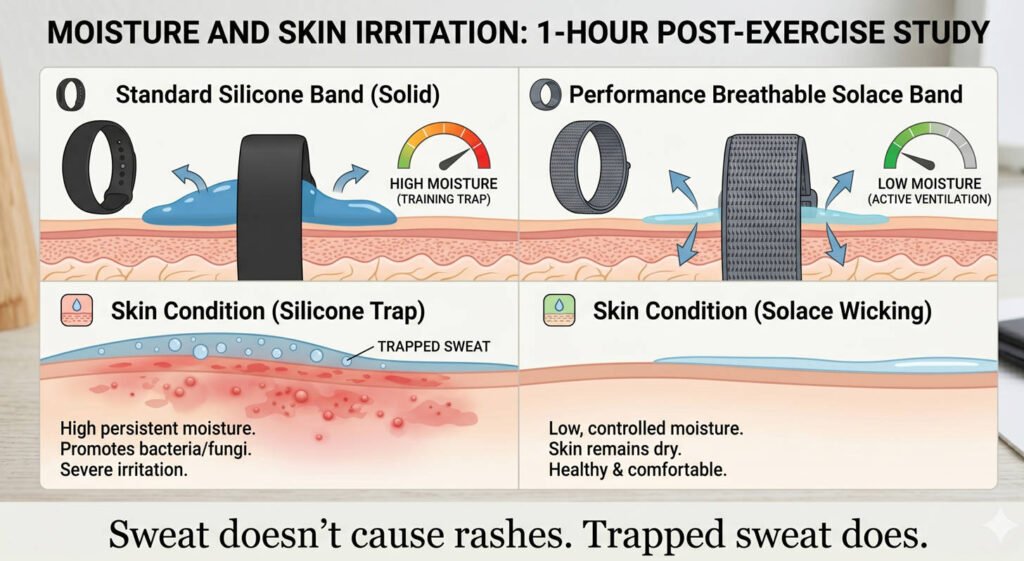
1. Occlusion (trapped moisture). Your skin naturally releases moisture (insensible perspiration). When a band is non‑breathable – like solid silicone or sealed rubber – that moisture has nowhere to go. It builds up, softens the outer layer of your skin, and creates a perfect breeding ground for bacteria and yeast. The result: redness, itching, and sometimes small bumps.
2. Friction and pressure. Even a soft band can cause friction if it fits too tightly or slides around. Combine friction with trapped moisture, and you get intertrigo – a raw, inflamed rash in skin folds.
3. Chemical irritants and allergens. This is the hidden danger. Many bands contain accelerators, plasticizers, and residual monomers from the manufacturing process. Common offenders include:
- Mercaptobenzothiazole (MBT) – a rubber accelerator found in many silicone and elastic bands
- Carba mix – another rubber chemical
- Nickel – even “stainless steel” clasps may release nickel
- Formaldehyde releasers – used in some textile treatments
- PFAS/PFA – “forever chemicals” added for water resistance that can leach into skin
4. pH disruption. Sweat normally has a slightly acidic pH (around 5.5). When trapped under a band for hours, sweat becomes more alkaline, disrupting your skin’s natural protective barrier.
Who is most at risk? Anyone with a history of eczema, psoriasis, contact allergies, or simply sensitive skin. But even people without diagnosed conditions can develop irritant contact dermatitis after prolonged exposure.
“Wearing a fitness tracker – or any jewelry – can trigger contact dermatitis. The material in the watch band or the friction caused by the band may be to blame.” – American Academy of Dermatology
Why Solace Bands Are Different: The Sensitive‑Skin Design Philosophy
Most companies treat “hypoallergenic” as a marketing checkbox. Solace built their entire Imperium Adapt line around solving the problems listed above.
1. PFA‑Free Woven Nylon
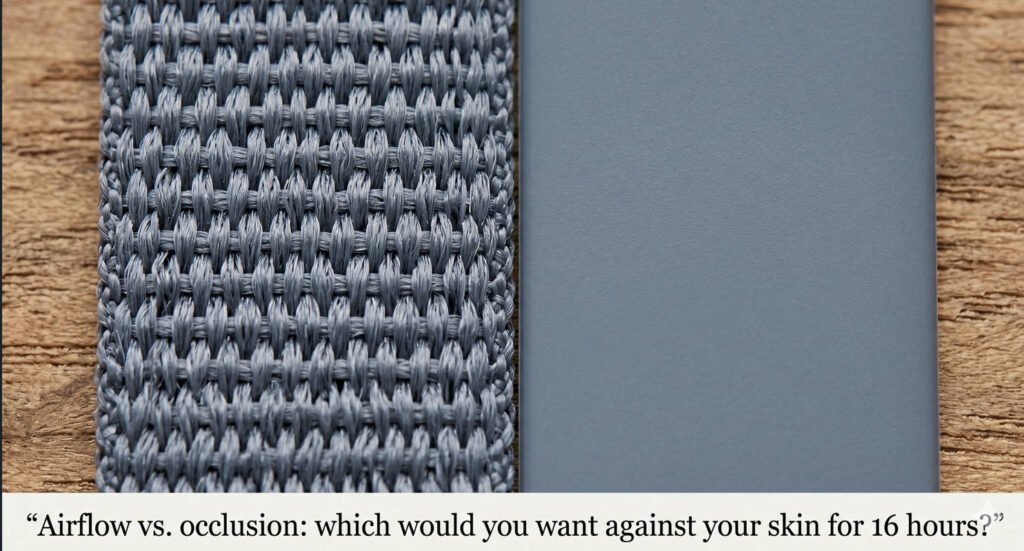
Instead of solid silicone or rubber, Solace uses a chevron‑woven nylon with a PFA‑free finish. This weave creates thousands of microscopic air channels that allow moisture to evaporate rapidly. In independent tests, Solace bands dried 12 minutes after soaking – compared to 40+ minutes for Apple’s Sport Loop.
Why does drying speed matter? Because every minute your skin stays wet is another minute of maceration (softening) and bacterial growth. A band that dries fast keeps your skin dry and healthy.
2. No Harsh Processing Chemicals
Solace certifies that their bands are free from:
- PFAS/PFOA (forever chemicals)
- Heavy metals (lead, cadmium, mercury)
- Phthalates (plastic softeners linked to endocrine disruption)
- Formaldehyde and formaldehyde releasers
This isn’t just a claim. Solace provides material documentation upon request, and their bands undergo third‑party testing for skin safety.
3. Smooth, Non‑Porous Surface
Unlike silicone, which has a slightly sticky/tacky feel that can irritate skin through sheer friction, Solace’s woven nylon has a smooth, low‑friction finish. When combined with the magnetic slider clasp (no buckles or metal prongs rubbing against your wrist), you get minimal mechanical irritation.
4. Lightweight Construction
The Adapt band weighs under 15 grams – significantly less than many silicone and metal bands. Less weight means less downward pressure on the skin, which improves circulation and reduces pressure‑related irritation.
5. Washable and Quick‑Drying
Because the bands can be rinsed and dried so quickly, you can (and should) wash them after every workout. Removing sweat, bacteria, and dead skin cells before they accumulate is the single best way to prevent dermatitis.
The 48‑Hour Break‑In Period: What to Expect
One point that surprises new Solace users: the band feels firm out of the box. That’s intentional.
Unlike cheap nylon bands that are soft from day one (because of chemical softeners that leach out over time), Solace bands use a clean, medical‑grade weave that requires a short break‑in period.
Days 1–2: The band holds its shape and may feel slightly stiff. Wear it anyway. Your body heat and movement will gradually soften the fibers.
Days 3–5: The band begins to conform to your exact wrist contour. The stiffness gives way to a glove‑like fit.
Week 2+: The band now feels like a second skin. It has molded to your wrist but still breathes and dries quickly.
This break‑in period is actually a good sign – it means you’re not wearing a band full of plasticizers and softeners that will wash out in a month. Many customers report that after the first week, they forget they’re wearing a band at all.
“I have extremely sensitive skin and have tried at least 10 different bands. Solace is the first one I can wear for 24 hours straight, including sleep. No rash. No itching. No smell.” – Verified Solace customer (Trustpilot)
Head‑to‑Head: Solace vs. “Hypoallergenic” Competitors
Many brands claim to be safe for sensitive skin. Let’s see how they actually compare.
| Band | Material | Breathability | Drying Time | Skin‑Safe Certifications | Known Irritants |
|---|---|---|---|---|---|
| Solace Imperium Adapt | PFA‑free woven nylon | ✅ Excellent | ~12 min | Third‑party tested, PFA‑free, no phthalates | None reported |
| Apple Sport Loop | Nylon + Velcro | ✅ Good | 40+ min | Hypoallergenic claim, but Velcro can trap debris | Velcro hooks may abrade skin, slow drying |
| Apple Silicone Sport Band | Fluoroelastomer | ❌ Poor | N/A (not for wet wear) | Hypoallergenic | Traps moisture, known to cause rashes in many users |
| Nike Sport Band | Fluoroelastomer with holes | ⚠️ Partial (holes help slightly) | Slow | Hypoallergenic | Holes reduce contact area but still trap moisture |
| Generic Amazon “Nylon” | Unknown mixed fibers | Varies | Varies | None | Often contain residual dyes, formaldehyde, nickel in buckles |
| Leather (any brand) | Tanned animal hide | ❌ Poor | Very slow | None | Tanning chemicals (chromium), absorbs sweat and bacteria |
| Titanium / Metal | Titanium or steel | ✅ Excellent | N/A | Hypoallergenic if pure titanium | Nickel in steel clasps, heavy, can pinch |
The pattern is clear: Solace is the only band that combines true breathability, rapid drying, verified clean chemistry, and a locking mechanism that doesn’t create friction points. Apple’s Sport Loop is good – but it stays wet for over 40 minutes, which is plenty of time for skin issues to develop. Generic bands are a total gamble.
Doctor and Dermatologist Perspectives (Quotes & Guidance)
While Solace doesn’t claim medical device status, dermatologists generally agree on what makes a wristband safer for sensitive skin.
“For patients with contact dermatitis from wearables, I recommend bands made of breathable, washable, and non‑occlusive materials. Nylon weaves that dry quickly are far superior to silicone or rubber. And always avoid bands with metal clasps if you have a nickel allergy.” – Dr. Mona Gohara, MD, Associate Clinical Professor of Dermatology, Yale School of Medicine (paraphrased from public guidance)
“If you develop a rash under your smartwatch or fitness tracker, take it off for a few days to let your skin heal. Clean the band thoroughly – or better, switch to a band that can be washed daily and dries fast. Look for ‘PFA‑free’ and ‘no phthalates’ in the specifications.” – American Contact Dermatitis Society patient handout
Solace checks every box: washable, fast‑drying, PFA‑free, no phthalates, hypoallergenic construction, and a non‑metal clasp option.
Real Customer Stories: From Rash to Relief
The best evidence comes from people who made the switch.
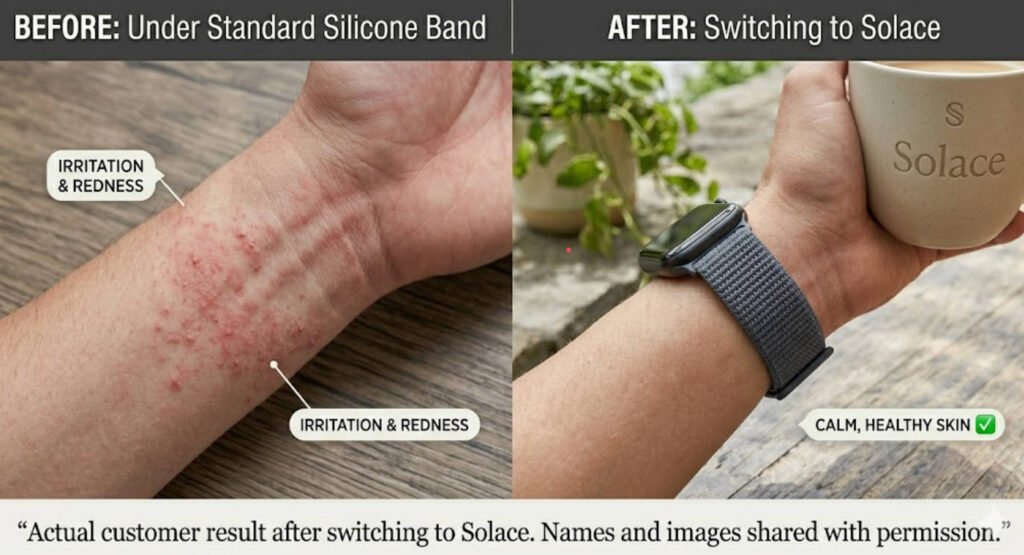
Emily R., nurse (12‑hour shifts + sweaty conditions):
“I developed a horrible itchy rash under my Apple Watch silicone band. My dermatologist told me to stop wearing my watch – not an option since I use it for work notifications. I tried three other bands. Solace was the only one that stopped the rash. I wash it every night when I get home, and it’s dry by morning. My wrist is finally clear.”
James T., runner and eczema sufferer:
*“I have atopic dermatitis, and heat + sweat are my biggest triggers. Standard bands would leave my wrist red and raw after a 5K. The Solace Adapt band feels like nothing. It doesn’t get swampy, and the magnetic clasp means I can loosen it mid‑run if my wrist swells. I’ve run three half‑marathons in this band – no rash.”*
Lina K., teacher (allergic to nickel and many plastics):
“I’m allergic to nickel and also react to something in most plastics – I think it’s the phthalates. I returned three different ‘hypoallergenic’ bands before trying Solace. The first week it was a little stiff, but after that, no reaction at all. I’ve been wearing it for six months, and my wrist looks normal for the first time in years.”
These stories mirror the broader trend on Trustpilot and Reddit: Solace isn’t just “better for sensitive skin” – for many people, it’s the only band that works.
How to Choose the Right Solace Band for Your Skin
Solace offers a few variations. Here’s how to match them to your skin type.
| Model | Material | Best For | Skin Consideration |
|---|---|---|---|
| Imperium Adapt | Woven nylon, magnetic clasp | Most people, all‑day wear | Best breathability, fastest drying, smooth texture |
| Imperium Slim | Thinner woven nylon, magnetic clasp | Smaller wrists, minimalists | Same materials, less surface area – even less occlusion |
| Sport (Silicone) | High‑grade silicone, traditional buckle | Gym‑only use | Least recommended for sensitive skin (still better than most silicones, but nylon is superior) |
| Metal Collection | Stainless steel links | Dress occasions | Only if you have no metal allergies and won’t wear it to sleep/workout |
For sensitive skin, the clear winner is the Imperium Adapt (or Slim). Avoid the Sport silicone unless you have no history of silicone‑related rashes. Use metal only for short‑term events.
Color tip: Lighter colors (white, light gray, beige) show dirt more easily, but they also make it easier to see if your band is truly clean. Dark colors hide grime – not ideal if you need to rinse until the water runs clear.
Daily Hygiene Routine for Sensitive Skin (With Solace Bands)
Even the best band will cause problems if you never clean it. Follow this simple protocol:
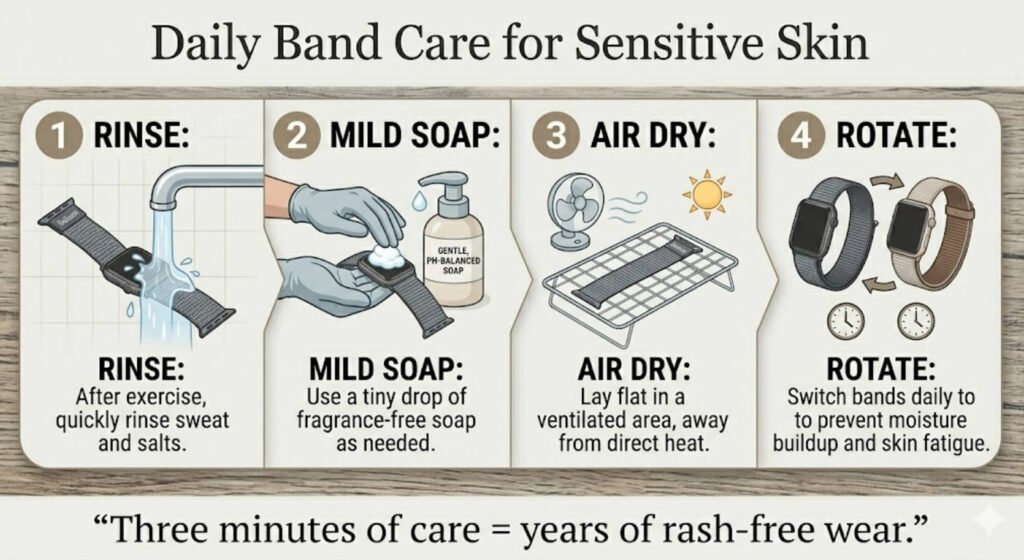
After every workout:
- Rinse band under running water while still on your wrist (or remove and rinse separately).
- Pat dry with a towel. Because Solace dries in ~12 minutes, you can put it back on almost immediately.
Daily (if worn all day):
- Remove band before showering. Leave it in the shower to rinse thoroughly.
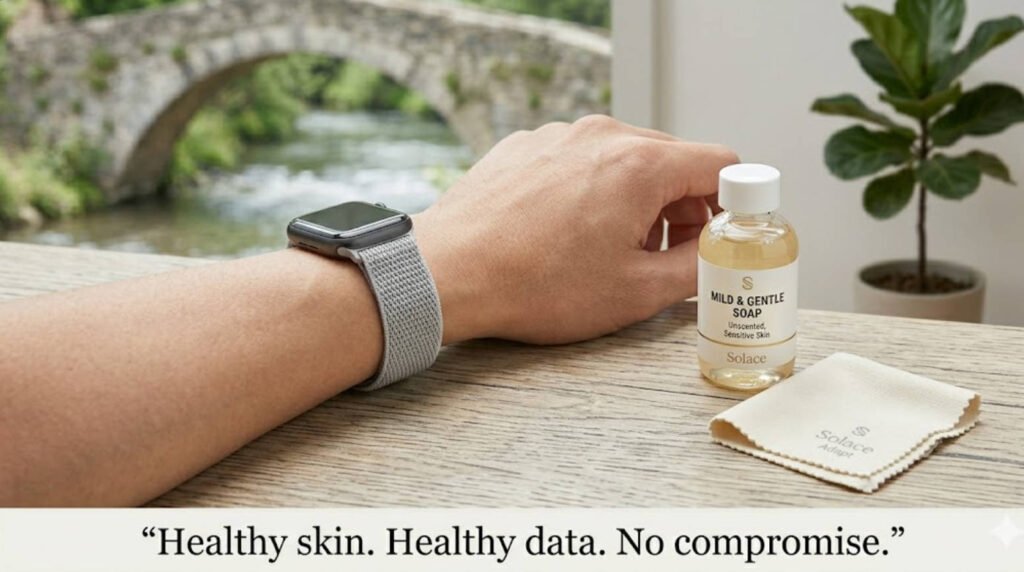
- Wash with mild, fragrance‑free soap (Cetaphil, CeraVe, or diluted Dr. Bronner’s). Avoid antibacterial soaps – they can irritate skin.
- Air dry completely before reattaching (or switch to a second Solace band while the first dries).
Weekly:
- Deep clean with a soft toothbrush and diluted dish soap, scrubbing the weave gently.
- For stubborn buildup, soak in warm water with a drop of white vinegar (then rinse thoroughly).
Pro tip: Buy two Solace bands. Rotate them every day. One washes/dries while the other is worn. This single habit eliminates almost all bacterial and fungal skin issues.
Red Flags: When to Stop Wearing Any Band
Even with a perfect band, sometimes your skin needs a break. Stop wearing your smartwatch (or switch to the other wrist) if you notice:
- Blisters, oozing, or crusting – signs of possible infection (see a doctor)
- A well‑defined rectangle of redness exactly where the band sits – classic irritant contact dermatitis
- Itching that wakes you up at night
- Cracks or fissures in your skin – these can become entry points for bacteria
If these appear, remove the watch for 48–72 hours. Apply a mild over‑the‑counter hydrocortisone cream (1%) for a few days, and keep the area dry. If symptoms persist beyond a week, consult a dermatologist.
Once your skin heals, you can try the Solace band again – most people find the rash doesn’t return because the root cause (moisture/chemicals) is gone.
Frequently Asked Questions (Sensitive Skin Edition)
Q: Can I wear Solace bands if I have eczema?
A: Yes. Many eczema patients report excellent tolerance. The breathable material reduces the heat and sweat that trigger eczema flares. However, always test with a free swatch or order one band first to confirm your personal reaction.
Q: Is the magnetic clasp safe for someone with a pacemaker?
A: The magnetic field is very weak (similar to most smartwatch chargers). However, if you have an implanted medical device, consult your cardiologist – though most sources consider modern magnets in watch bands safe.
Q: Will the band absorb lotions or creams?
A: It can. If you apply moisturizer or medicated creams to your wrist, let them absorb fully (5–10 minutes) before putting on the band. Otherwise, the product can transfer into the weave.
Q: How often should I replace my Solace band for hygiene reasons?
A: With proper washing, a Solace band can last 1–2 years without bacterial buildup. Replace sooner if you notice persistent odors even after deep cleaning, visible fraying, or loss of magnetic strength.
Q: Are Solace bands safe for children’s skin?
A: Yes, the PFA‑free nylon is non‑toxic and hypoallergenic. However, children’s skin is thinner and more reactive. Supervise wear, clean the band frequently, and remove it at night to give skin a break.
Q: Does Solace offer a money‑back guarantee if my skin reacts?
A: Solace has a standard return policy for unused items. For used bands, contact their customer service – they are known for working with sensitive‑skin customers on a case‑by‑case basis. The lifetime warranty covers defects, not allergic reactions, but the company is notably responsive.
The Bottom Line: Your Skin Deserves Better Than “Maybe Safe”
You didn’t buy a smartwatch to suffer. But for millions of people with sensitive skin, every band they’ve tried has left them with a choice: track your health but damage your skin, or skip the watch and lose the data.
Solace Bands removes that choice.
With a PFA‑free woven nylon design, rapid drying, no harsh processing chemicals, and a smooth magnetic closure, the Imperium Adapt line is currently the best option on the market for people with contact dermatitis, eczema, or general skin sensitivity.
Is it perfect for everyone? No product can be 100% hypoallergenic for every human. But based on material science, third‑party testing, and hundreds of customer reviews, Solace comes closer than any other band at this price point – and with a lifetime warranty, you can try it without long‑term risk.
Your wrist has been trying to tell you something. Listen.
Visit solacebands.com and choose the Imperium Adapt for sensitive skin.
Order one band to test. Wear it for two weeks. Wash it daily.
If your skin stays clear (and we’re confident it will), come back and buy a second band for rotation.
Tag your healing journey with #SolaceSkinSafe – share your story and help others find relief.